
Barton Federal Release Meanings
No BOP institution is located in Barton County. Federal custody is a follow-on system only when the case, detainer, or receiving agency supports it. A Barton jail release sheet that names U.S. Marshals or federal authority documents the transfer out of county control. It does not prove community release.
BOP results can show a past Release Date, “RELEASED,” or “Not in BOP Custody.” Those terms establish that BOP no longer holds the person. They do not rule out state, county, immigration, or supervised-release obligations. A future BOP date is projected and may change.
| Federal record | What it answers |
|---|---|
| BOP locator | Post-1982 BOP identity, location, and release information |
| Federal docket | The order, sentence, dismissal, or other legal event |
| USMS and detaining facility | Pretrial or court-remanded physical custody |
| Barton release sheet | When county custody ended and who received the person |
Confirm Barton Federal Releases
Use the BOP Inmate Locator by register, DCDC, FBI, or INS number when possible. Name search permits optional age, race, and sex fields. Exact identification matters because a name match alone is not enough.
- Confirm a federal case or federal receiving agency.
- Search an exact federal identifier before using a name.
- Record the result’s exact release date and location or custody wording.
- Open the District of Kansas docket to explain the event.
- For pretrial custody, contact the detaining facility and use the docket because USMS has no historical public locator.
The Barton County release process is still needed to prove the county exit that preceded a federal transfer.
Federal Release Record Fields
BOP locator results can contain the person’s name, register number, age, race, sex, release date, and location. “UNKNOWN” means the term is undetermined, not that release occurred. BOP also warns that First Step Act recalculation can temporarily make future dates outdated.
The federal docket supplies the reason for release, such as sentence expiration, court order, dismissal, time served, compassionate release, appeal, or another event. PACER access rules or fees may apply. Older federal custody can require National Archives research.
BOP Release Search View
The official BOP locator pictured below shows the correct federal search route and a released-result format.
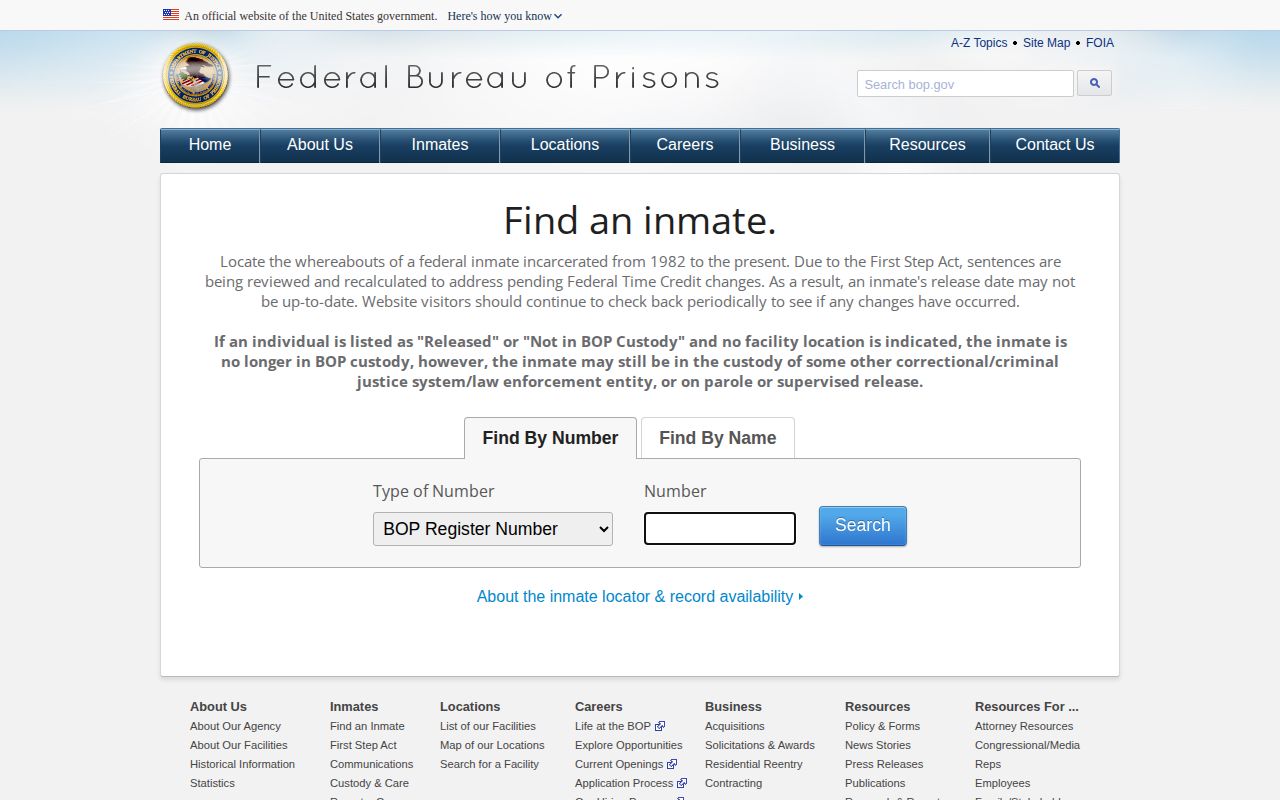
A past date in this system concerns BOP custody. Compare it with the docket and any Barton release sheet before describing the full custody path.
Barton USMS Custody Releases
The U.S. Marshals Service manages federal pretrial and court-remanded prisoners and may use contracted jail space. A person can therefore have federal physical custody without a useful sentenced-prison record in the BOP locator. USMS publishes no equivalent historical released-person database.
Use the federal docket to identify the detention or release order, then contact the named detaining facility for the physical custody event. A judge’s order and the actual exit can occur at different times. Record both with their source.
Federal Release Status Limits
A BOP past release date does not show whether supervised release continues. It also cannot prove absence from another jurisdiction’s custody. Conversely, a missing BOP result does not negate a federal pretrial case because BOP and USMS roles differ.
Search federal systems only when the case supports them. An ordinary Barton arrest on state or local charges will not appear merely because the jail sometimes holds outside prisoners. The named court and receiving agency keep the inquiry in the correct jurisdiction.
Match a Federal Release Record
An exact federal identifier is safer than a name. A register number, FBI number, DCDC number, or INS number narrows the locator to a specific federal record. If only a name is known, compare optional age, race, and sex fields with other reliable case information. Do not merge two people merely because their names match.
Record the name, register number, release date, location or custody wording, and access date. Then use the docket to confirm the defendant and event. A BOP record can include a pretrial detainee or material witness who never served a federal sentence, so the legal context cannot be inferred from the locator alone.
Older custody before the locator’s post-1982 coverage may require records research. National Archives holdings and the federal court file can be relevant. State and local systems cannot fill a federal archive gap unless they hold a separate transfer document.
Barton to Federal Custody
The Barton release sheet is the bridge when county detention ends through a federal transfer. Ask for the exact time, authority, and receiving agency. If the recipient is USMS, use the federal docket and named detention facility. If the person later enters BOP sentenced custody, the BOP locator can show the resulting federal status.
These events may be days or months apart. A county transfer date is not the federal sentencing date. A release order can precede physical exit, and supervised release can continue after BOP custody ends. Keep each event under its own agency and label.
No BOP institution was located in Barton County. A federal page in the release map describes a possible custody route, not a local facility. That distinction prevents a Barton jail stay from being misreported as federal imprisonment.
Projected Federal Release Dates
A future date in the BOP locator is a projection. BOP warns that recalculations under the First Step Act can make displayed dates temporarily outdated. Court action, sentence credit, program credit, detainers, and administrative computation may also affect the operative date. Do not promise release based on a captured estimate.
For an event that already occurred, a past release date is stronger but still limited to BOP custody. The federal docket may show the order or sentence basis. Another sovereign’s locator may be needed if a detainer caused transfer at the end of BOP control.
Federal Docket Release Evidence
The docket can distinguish sentence expiration, dismissal, time served, appeal release, compassionate release, or another judicial event. Its register is a chronology, while the filed order gives the detailed terms. PACER may require an account and can impose access fees.
A docket order does not by itself state the exact moment a detention facility opened the door or completed a transfer. Pair the judicial entry with BOP or facility custody data. If the two dates differ, report both according to their roles instead of forcing a single unsupported timestamp.
Federal Custody Records That Do Not Overlap
The Barton, USMS, BOP, and federal court records describe different steps. Barton Sheriff Records can show the exact local exit and the agency that received the person. USMS manages federal pretrial and court-remanded custody but offers no public historical released-person locator. BOP tracks its own population and provides public records for many federal inmates released after 1982. The docket explains the legal authority behind detention, transfer, sentence, or release.
Do not force those steps into one date. A Barton transfer to USMS can precede a federal detention hearing or sentence. A person may remain in a contracted local facility without a useful sentenced-prison history in the BOP locator. Later entry into BOP custody creates a separate federal record. At the end of BOP control, supervised release or another jurisdiction's hold may still apply.
A sound chronology lists each event with its custodian: Barton release time, federal receiving agency, court order, BOP location or release result, and any later supervision. When two dates differ, retain both labels. The court's legal order and a facility's physical release are related but not identical facts.
BOP Result Language and Date Limits
A result with a past Release Date, RELEASED, or Not in BOP Custody supports only the conclusion that BOP no longer holds the person. It does not establish that federal supervision ended, that charges were dismissed, or that no state, county, or immigration custodian took control. Use the docket and any transfer record to describe what followed.
UNKNOWN means the term is undetermined. It is not a release label. A future date is a projection and can move as BOP applies sentence calculations, credits, court changes, detainers, or release planning. BOP specifically warns that First Step Act recalculation can temporarily make dates outdated. Save the access date and avoid turning a projected field into a promise.
The locator can also contain a pretrial detainee or material witness who did not serve a federal sentence. That is another reason to open the federal case rather than inferring the person's role from the locator. If no result appears, verify the identifier and scope. A missing BOP entry may reflect USMS pretrial custody, older records, spelling, or a person who was never part of the BOP population.
Older and Pretrial Federal Release Research
For custody before the locator's post-1982 released-inmate coverage, the federal docket and National Archives may be necessary. Start with the court, case number, defendant identity, and approximate dates. A state or county record can document a separate handoff, but it cannot replace a missing federal custody file.
For pretrial release, find the detention or release order in the District of Kansas case and identify the facility holding the defendant. Contact that facility for the physical custody event when public. The absence of a USMS history tool means the docket and custodian must be used together. PACER rules and fees may apply to online case access.
No BOP institution was found in Barton County. This page therefore describes a follow-on federal system, not a local prison. Route an inquiry here only when the Barton sheet, federal docket, or other reliable record names federal authority. Ordinary Barton city and state cases remain in their county, municipal, court, or KDOC paths.