
Barton County Supervision Types
Three systems can follow a Barton County release. KDOC parole or mandatory postrelease supervision follows a state prison term. The Kansas Adult Supervised Population Electronic Repository, or KASPER, is the public starting point. Central Kansas Community Corrections, called CKCC, handles intensive felony community corrections ordered in the 20th Judicial District. Court-services probation is a nonprison sanction controlled by the sentencing court. A person can leave the Barton County Detention Facility into any of these paths.
Parole means release from prison while KDOC control continues. Probation generally lets a person remain in the community under a court sentence instead of serving that term in prison. Mandatory postrelease supervision follows the prison part of many Kansas guidelines sentences. Discharge means the relevant corrections obligation has ended. The jail sheet may state “released to Community Corrections,” but the court record identifies the legal authority and CKCC confirms its own role.
| Path | Authority | Best public check |
|---|---|---|
| Parole or postrelease | KDOC | KASPER status and current field-office directory |
| Community corrections | 20th Judicial District and CKCC | Court disposition, then CKCC |
| Court-services probation | Sentencing court | Public court case and named probation office |
- Parole
- Community release from state confinement while KDOC supervision continues.
- Probation
- A court-ordered community sentence rather than state imprisonment.
- Absconder
- A supervision label for unknown whereabouts or avoidance, not proof of a new conviction.
- Discharge
- The end of the identified custody or supervision obligation.
Verify Barton County Supervision
Start with the correct person and sentence. Names can repeat. A KDOC number is more precise than a name, while a court case number helps separate local probation from state supervision. KASPER includes Barton filters for conviction county and parole-supervision county. A Barton conviction filter does not prove that the person was last held in the county jail, and a past jail entry cannot prove current reporting status.
- Read the sentencing case or release sheet to learn whether the person went to KDOC, CKCC, or court services.
- For KDOC control, accept the KASPER disclaimer and search by KDOC number, or use name plus lawful identifiers.
- Read the exact status. “Parole” shows community release with control; “Discharged” more strongly shows KDOC involvement ended.
- Use the KDOC field-office directory for the current office. Office assignments can change.
- When the court ordered community corrections, review the disposition and contact CKCC. Use the court’s named office for ordinary probation.
KASPER updates each working day, not in real time. It also warns that community-corrections probation events after April 21, 2021 cannot be displayed during modernization. That limit makes direct CKCC confirmation important for recent Barton County post-release supervision. The broader Barton County released-inmate search and record path explains how the jail sheet and court order establish the release itself.
Important: A KASPER absence does not disprove a Barton County jail release or local probation. KASPER covers the KDOC population, not every county booking.
Barton County CKCC Supervision
CKCC is the local hub for intensive felony community corrections. It serves Barton, Ellsworth, Rice, Russell, and Stafford Counties from Great Bend. This regional role is distinctive. CKCC is not KDOC parole, and it is not a general locator for everyone on probation. The sentencing record must point to community corrections before CKCC becomes the right verification office.
Central Kansas Community Corrections
1806 12th St.
Great Bend, KS 67530
620-793-1930
The official CKCC page provides the strongest local office reference. Its published material also helps distinguish judicial supervision from physical jail custody. A Tribune entry can flag a transfer to community corrections, but Sheriff Records supplies the actual exit record. The court supplies the order. CKCC then confirms its own publicly releasable supervision information.
The official CKCC page is shown below as the source for this local route.
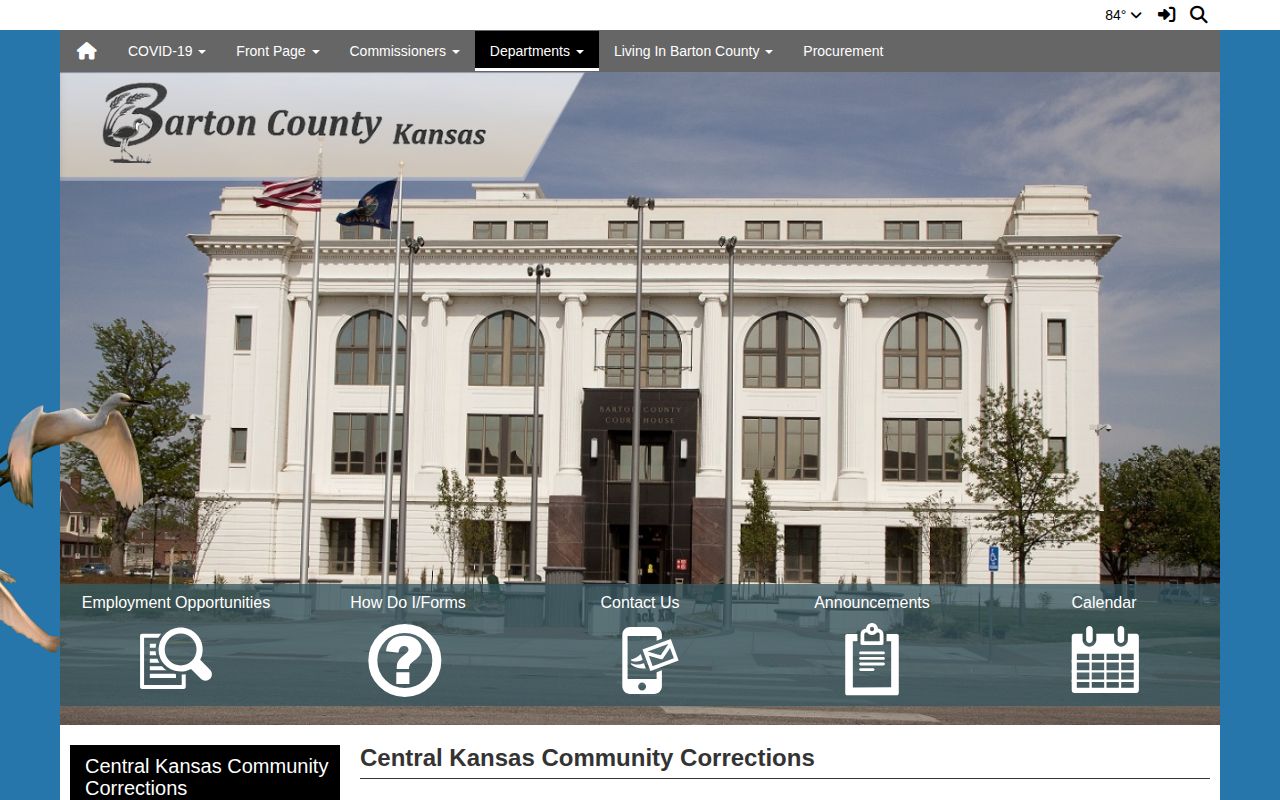
The page confirms that regional felony supervision is locally based in Great Bend, yet legally distinct from KDOC parole.
Barton County Absconder Checks
Kansas separates parole absconders from community-corrections absconders. Searchers must not merge the two. The KASPER parole absconder search can be filtered for Barton, and photos may be enabled. The community-corrections absconder search is a different route. Recent CKCC information still needs local confirmation because of KASPER’s stated data cutoff.
Under K.S.A. 75-5217, supervision violations can lead to a warrant, arrest, and further process. The word absconder should remain narrow. It signals unknown whereabouts or avoidance of supervision. It does not prove a new crime, a conviction, or present prison custody. If a person is later arrested on a supervision warrant, an older release record can still be correct for the earlier event.
The Barton-filtered parole search and its separate community-corrections counterpart are visible in the official captures.
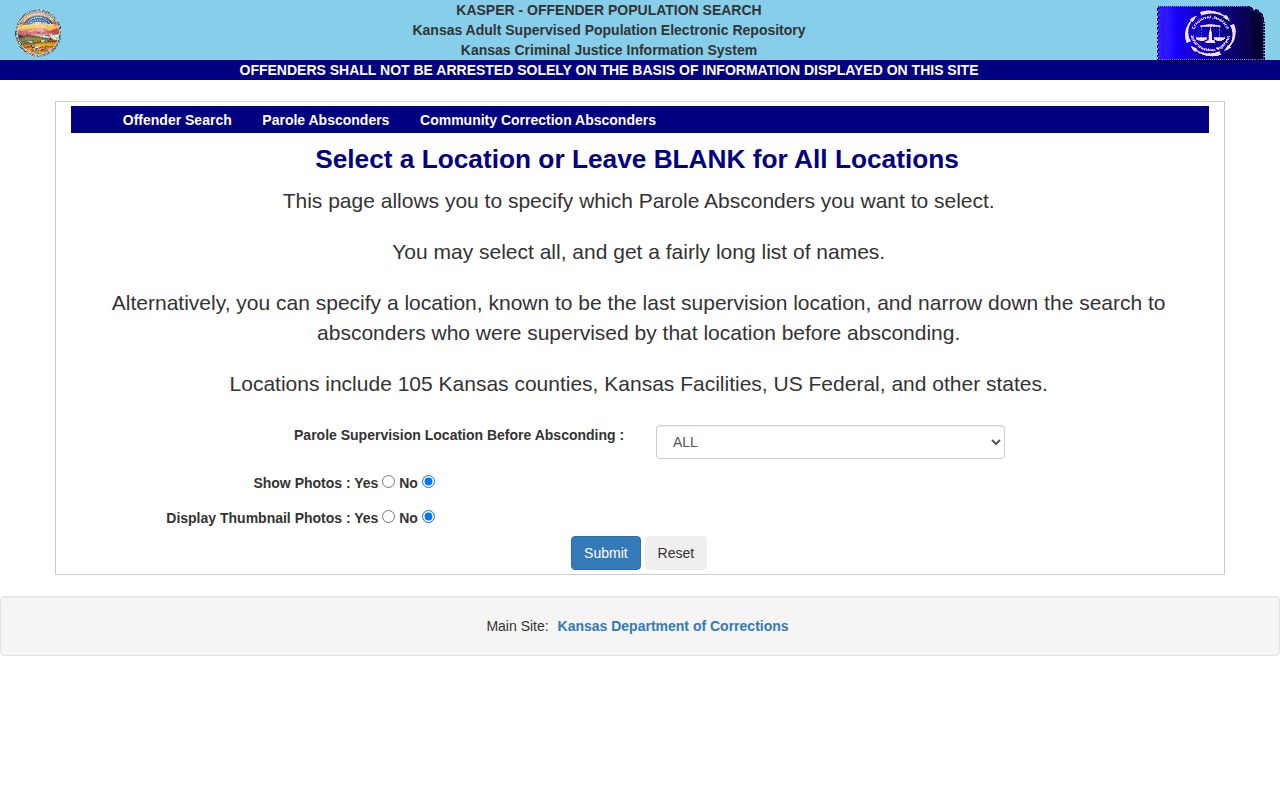
The separate screens reinforce why one result cannot stand in for the other supervision system.
Barton County Supervision Changes
Conditions of supervision come from the court, KDOC, or CKCC. Public verification does not require protected case-management detail. At a high level, a violation may produce added review, a warrant, arrest, revocation proceedings, or a return to custody. A parole hearing or public-comment list is only one stage. The sequence is prospective list, hearing, decision, then actual status in KASPER or a KDOC record. “On the parole list” does not mean “released.”
Eligibility also turns on the crime date, journal entry, sentence type, and Kansas law. Many later guidelines cases use a determinate prison portion followed by mandatory postrelease supervision. Older indeterminate cases can use discretionary parole rules. No one should promise a release or discharge date from the offense name and sentence length alone. When records conflict, preserve the exact labels and seek correction from the agency that created the record.
Kansas VINE is not a supervision database. It covers Barton County jail custody but expressly excludes KDOC prisoners. KDOC Victim Services is a parallel notification route for people in KDOC custody or under KDOC supervision, subject to its eligibility rules.
Barton Release Property Appointments
Sheriff-held evidence and personal property follow a separate process after release. The Barton County evidence and property procedure says releases occur by appointment on weekdays from 9 to 11 a.m. and 1 to 4 p.m. Walk-ins are not accepted. Evidence generally needs a court order or journal entry. Personal property is reviewed case by case.
This procedure should not be confused with routine belongings returned during jail discharge. It also does not identify the person’s parole officer or probation status. The distinction matters because a released person may be solving several separate tasks: recovering property, confirming the court order, and reporting to a supervising agency. Each task has its own custodian and record.
Supervision ends only when the controlling agency or court records discharge, termination, or another final action. A KASPER “Discharged” status is stronger evidence that KDOC control ended than “Parole.” For probation or CKCC, use the court case and supervising office. Keep the date and exact label with any saved record.
Barton County Discharge Records
A final supervision check should reconcile the sentence, supervising system, and closing event. For KDOC, save the KDOC number, exact KASPER status, any visible custody or sentence event, and the date the record was accessed. A parole status remains active state control even though prison confinement ended. A discharge event is the better public starting point for showing that the KDOC obligation ended. For a detailed record, identify the person by KDOC number and event date in a Kansas Open Records Act request.
Local probation ends through the court process that created it. The public case may show discharge, termination, revocation, or another order, subject to access limits. CKCC can confirm its own public information when the judgment assigned intensive community corrections. It cannot substitute for KDOC on parole, and KDOC cannot establish every court-services probation event. This agency-by-agency method prevents a past “released” jail line from being stretched into a claim that all legal control ended.
Records can change. A later warrant, arrest, or revocation can return someone to custody after an earlier release that was accurate when entered. A correction, sealing order, or expungement can also alter what remains public. When two official records disagree, note both dates and labels, then seek an explanation from their originating offices.
Barton Parole Record Sequence
For an older Kansas sentence that still uses discretionary parole, public records appear in stages. The Prisoner Review Board may first place the person on a prospective public-comment list. That list names a later hearing and possible eligibility period. It does not establish that release was approved or completed. After the hearing, the Board’s decision publication records the outcome. KASPER then supplies the later public custody or supervision status. Keeping those sources in order prevents a hearing notice, grant, continuance, or serve-to decision from being mislabeled as the date the person physically left prison.
Identity must remain stable across the sequence. Match the KDOC number, not merely the name, when reviewing the Prisoner Review Board material and KASPER. Save the publication month and precise decision term. Kansas sentences vary by crime date, minimum term, mandatory minimum, and statutory exclusion. The journal entry and KDOC computation therefore control more than a rough sentence-length calculation. After release, the public KASPER status and current field-office directory are the main state indicators that supervision continues in Barton County.